TL;DR
Schema markup (structured data) doesn’t directly control rankings in AI Overviews, but it does influence inclusion and visibility. When your content is marked up properly, Google and other AI systems can better understand, extract, and reference it. Pages with schema are easier for AI to parse and more likely to appear in AI Overviews, especially for e-commerce, FAQ, and local business queries. Schema won’t magically push you to the top, but it makes your content easier to feature and attribute. If you want to compete in an AI-first search world, structured data isn’t optional.
Need help getting your website AI-ready? LuccaAM specializes in SEO, structured data, and web development that make your pages stand out, even in AI-generated results. Let’s build content that ranks and gets picked up by AI.
Why Schema Markup Matters More Than Ever
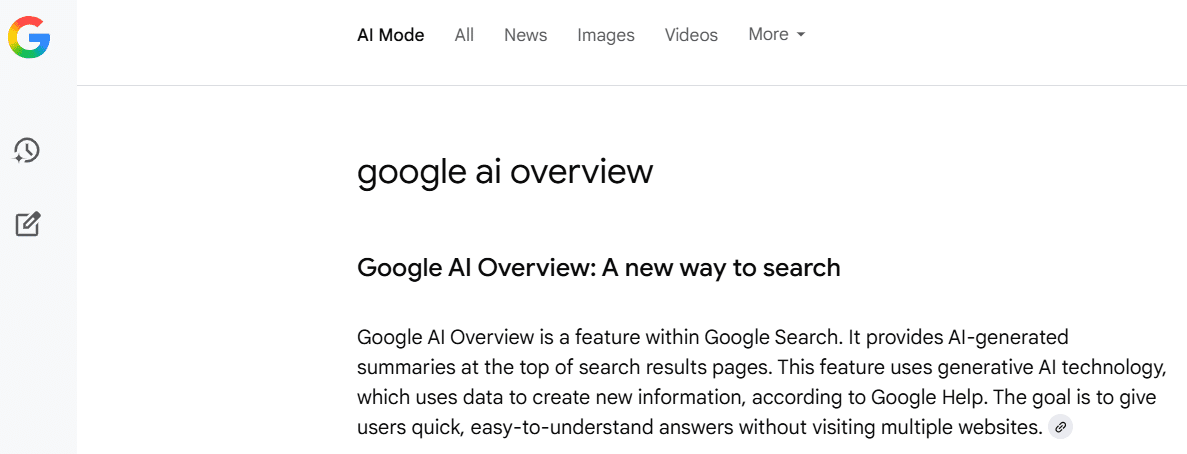
Search is changing. Google’s AI Overviews, formerly known as SGE (Search Generative Experience), now generate summaries using AI, often before users see traditional organic results. These summaries pull from various sources, blending them into a single, paraphrased response.
So, how do you make sure your site is one of those sources?
Begin by making your content machine-readable. Schema markup turns your site from a wall of text into organized data AI can easily parse and use. Schema markup gives search engines context. It identifies entities, content types, and relationships in your page. And it’s now one of the most efficient ways to help AI models understand what your content says.
How Schema Affects Inclusion in AI Overviews
Structured data offers guidance to AI. Without it, LLMs must guess what a section of text means. With it, they know exactly where the product name is, which paragraph is a how-to guide, or which block is a direct answer to a question.
Key points:
- Schema clarifies your content. Google has stated that structured data provides “explicit clues” about page meaning. This helps AI systems quickly decide if your content fits a query.
- Pages with schema get pulled more often. SEO platforms like Conductor and Milestone have documented examples where adding schema (Product, NewsArticle, FAQ) led to AI Overview inclusion.
- Different schema types serve different goals. FAQ is great for informational snippets. Product helps with shopping queries. LocalBusiness boosts visibility in regional AI responses.
Schema’s Role in AI Ranking - What We Know
Let’s be realistic: schema doesn’t make your content rank #1 inside an AI Overview. But it can make your content:
- Easier to find
- Easier to parse
- More likely to be cited correctly
In fact, schema might help your answer appear for specific sub-queries that others don’t cover.
Example: if you use FAQ schema to answer a common follow-up question about a service or product, the AI might pull just that piece and list your site as the authority, even if your overall page isn’t ranking in the top 3.
Organizing your content with topic clusters also helps AI systems identify relevance and relationships across your site.
Organic Rank Still Dominates AI Overview Placement
Recent data shows that Google now pulls most AI Overview sources from the top 10 organic results. About 80% of cited links are from the top 3 spots. Schema alone won’t bump you into those ranks; you still need strong SEO fundamentals. But once you're there, schema increases your odds of being the chosen source.
Put another way: you need to rank well to get into the AI summary, and schema helps secure your position when the AI decides who to quote.
Platforms Beyond Google: Still Schema-Friendly
Google is ahead in using schema for generative search, but other platforms follow the same logic:
- Bing AI Chat pulls from top search results and benefits from schema-labeled content
- Perplexity.ai favors well-structured Q&A or list-based content
- Voice assistants like Google Assistant rely on schema for things like nutrition facts, business hours, and more
No matter the platform, schema helps machines interpret your site faster and more accurately.
We also break down broader AI SEO considerations for content strategy in a machine-learning-first search environment.
Which Schema Types Matter Most
Here’s a quick hit list:
- Product – for e-commerce, price, review, and stock details
- FAQPage – for answering user questions directly
- HowTo – for tutorial-style content
- LocalBusiness – for brick-and-mortar visibility
- NewsArticle – for publishers and thought leadership
- Review – for credibility and user-generated content
- Organization/Person – to build trust and identity
Using these on relevant pages makes it easier for AI to extract the right content and give you credit. If you're running an online store, here's how to apply schema markup for eCommerce SEO to improve product visibility in AI-driven shopping results. To increase product visibility in AI and Shopping Graph, make sure your feed and schema align: Google Merchant Center best practices.
Real-World Results and Takeaways
- Google’s Shopping Graph and Knowledge Graph, both used in AI Overviews, are powered in part by schema markup.
- Sites that implemented schema saw more impressions, higher click-throughs, and more frequent AI citations.
- Structured content (clear HTML layout, headings, and schema) outperforms unstructured text blobs when it comes to AI recognition.
 Pair schema with strong internal linking strategies to make your entire content network easier for AI and crawlers to navigate.
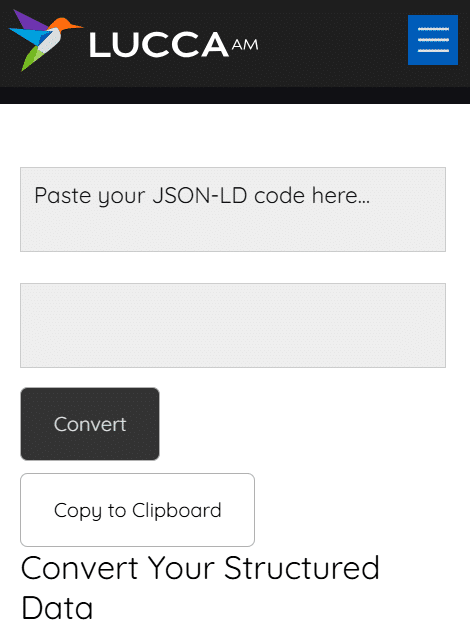
Fix JSON-LD for Google Tag Manager (Free Tool)
If you’re adding structured data through Google Tag Manager, it needs to be escaped properly or Google won’t validate it. Use our free JSON-LD Google Tag Manager Fix Generator to convert your raw JSON-LD into a GTM-friendly format that passes Google’s Structured Data Testing Tool. Just paste, convert, and copy — no syntax headaches.
Final Thoughts: Schema Isn’t Optional Anymore
In the AI-driven search landscape, clarity wins. Schema doesn’t replace SEO. It supports it. And when combined with high-quality content and strong rankings, it gives your site an edge, not just in search, but in how AI systems understand and cite your content.
If you're planning for what's next, don't miss our roundup of SEO optimization strategies for 2025 that align with how AI understands content.
Ready to future-proof your website for AI Overviews?
Let LuccaAM help. We build sites that rank, get noticed, and get picked up by Google’s AI — with schema and SEO that actually work. Let's get your content cited.
FAQs
Does structured data guarantee my page will show up in Google’s AI Overviews?
No. It increases the chances by helping the AI understand your content, but organic rank and relevance still matter most.
What kind of schema should I prioritize for SEO?
Focus on schema that fits your content. For example: FAQPage for informational blogs, Product for e-commerce, LocalBusiness for service areas, and Article for thought leadership.
Can schema help if my page doesn’t rank in the top 10?
Not likely. Schema supports visibility, but it won’t make up for poor rankings. You need to fix your SEO first.
Does Bing or Perplexity use schema like Google does?
Not to the same extent, but schema still helps with parsing and clarity, which supports citation across all AI-driven platforms.